
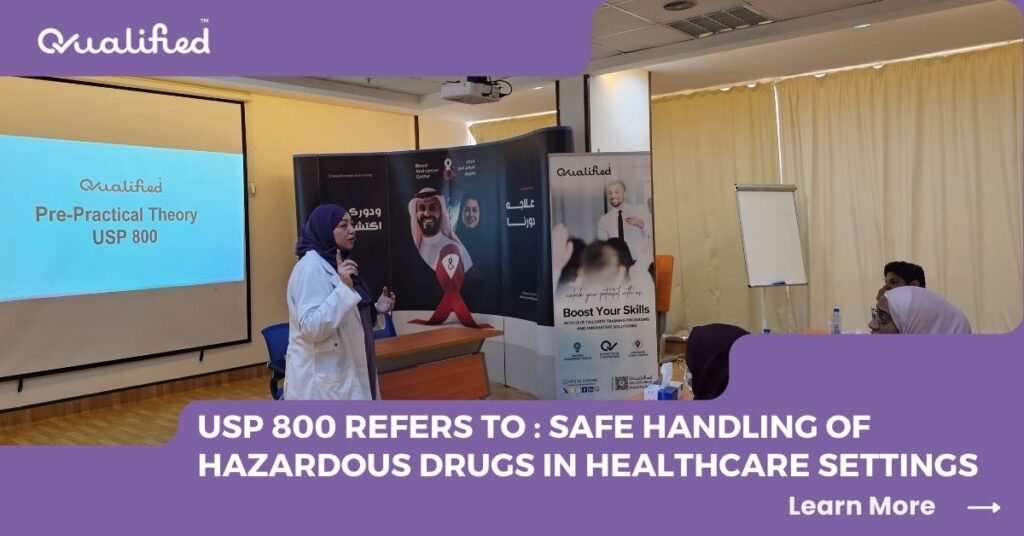
Handling hazardous drugs requires strict precautions to protect patients, healthcare workers, and the environment. USP 800 refers to the standards that ensure the safe handling of these drugs.
To understand its impact in the healthcare sector, this article will explore the purpose and scope of USP 800 guidelines, compare them with related guidelines like USP 795 and 797, and outline the key focus areas of USP 800.
What USP 800 Refers To: Purpose & Scope
USP 800 refers to the United States Pharmacopoeia’s guidelines for the safe handling of hazardous drugs (HDs), aiming to protect healthcare workers, patients, and the environment.
USP 800 Purpose
To safeguard the health and safety of healthcare professionals and patients who may be exposed to HDs. These guidelines offer best practices for managing HDs. Exposure may occur during:
- Receiving.
- Storing.
- Compounding.
- Dispensing.
- Administering.
- Spills.
- Waste Disposal.
USP 800 Scope
It includes all healthcare workers and facilities managing HDs, including hospitals, pharmacies, oncology centers, clinics, physicians’ offices, and veterinary clinics. Individuals who might be exposed to HDs include pharmacists, doctors, nurses, home healthcare workers, and veterinarians.
USP 800 doesn’t cover manufacturing and supply chain workers who handle HDs before they reach a healthcare facility.
USP 795, 797 & 800 Quick Comparison

USP 795 | USP 797 | USP 800 | |
Scope | Non-sterile compounds like topical, oral, nasal, oral, and otic preparations. | Sterile compounds like injectable drugs, eye drops, and infusions. | Hazardous drugs in healthcare facilities. |
Purpose | Ensures that non-sterile preparations meet quality standards to ensure patient safety. | Aims to prevent microbial contamination and ensure sterility. | Promoting worker & patient safety and protecting the environment from exposure to HDs. |
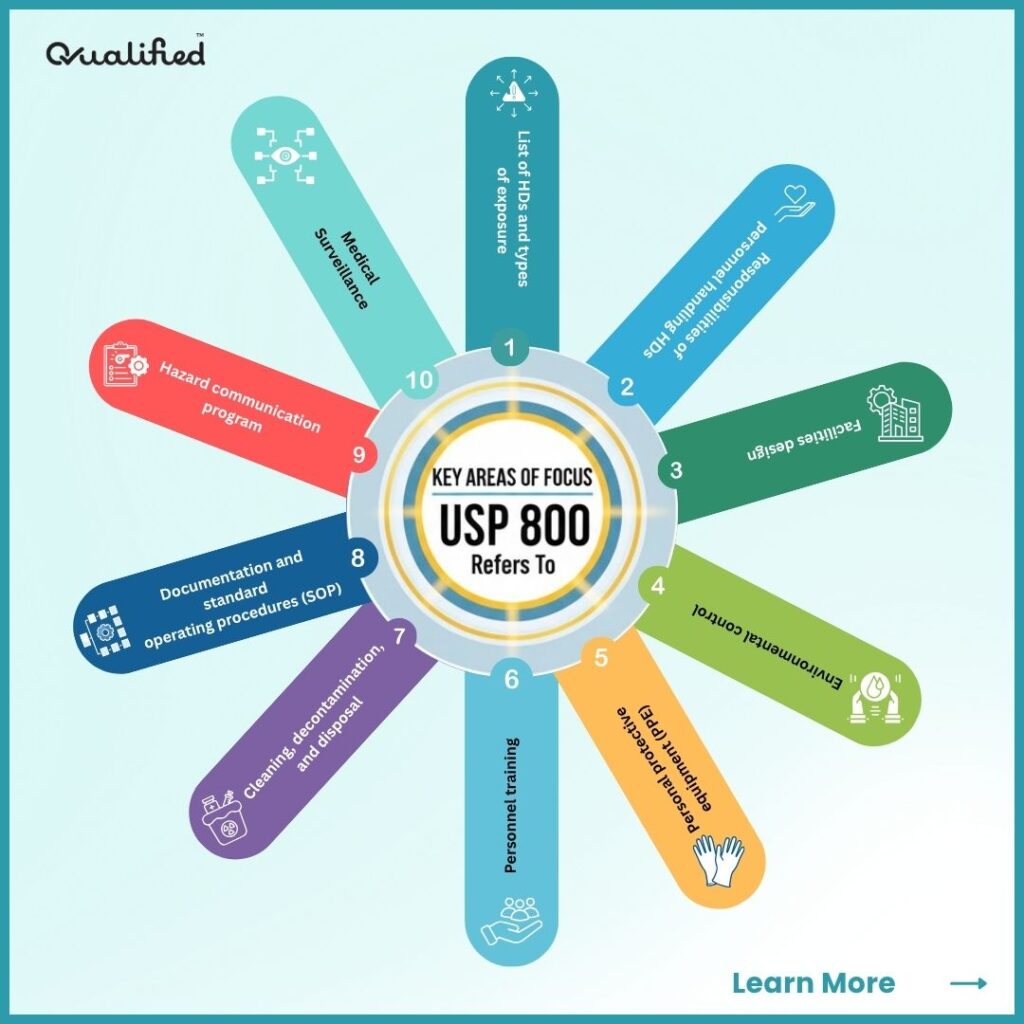
Key Areas Of Focus USP 800 Refers To
The key areas of focus are:
- List of HDs and types of exposure:
Maintaining the NOISH list of HDs -must be reviewed every 12 months, declaring the potential routes of exposure based on activity. - Responsibilities of personnel handling HDs:
Each entity must assign a qualified individual to develop and implement procedures, ensure compliance with regulations, and oversee competency assessment and quality control. - Facilities design:
Designed to minimize the risk of exposure to HDs. This includes areas of receipt, storage, and compounding. - Environmental control:
Performing routine surface wipe sampling initially and every 6 months. Personal protective equipment (PPE):
Adequate PPE that protects healthcare workers while handling HDs or cleaning a spill. It includes gloves, gowns, masks, and eye protection.Personnel training:
All personnel handling HDs must be trained regarding their job functions. Training includes aseptic compounding of chemotherapy, ensuring accurate dosing and administration.Cleaning, decontamination, and disposal:
Proper procedures for decontaminating, deactivating, cleaning surfaces and equipment, and safe disposal methods for hazardous waste.Documentation and standard operating procedures (SOP):
Maintain and review SOPs for HD handling -at least every 12 months, cover all aspects of HD handling, including designated areas, PPE use, decontamination, etc.Hazard communication program:
Full program for training workers on proper storage, transportation, and labeling of HDs.Medical Surveillance:
To reduce adverse health effects for personnel handling HDs over time. Perform follow-up plans for affected personnel.
Enhance your expertise with the Advanced Safe Chemotherapy Compounding & Handling Certification Program. This comprehensive program equips pharmacists with essential knowledge and skills to ensure compliance with USP 800 standards.
Impact Of USP 800 In Healthcare Settings
USP 800 standards have significantly changed healthcare environments by improving safety criteria and reducing exposure to HDs. Its main contribution is reducing health hazards to healthcare professionals, such as technicians, nurses, and pharmacists, by enforcing strict rules on the handling, storage, and disposal of HDs.
USP 800 creates a safer environment through strict engineering controls such as closed-system drug-transfer devices (CSTDs) and negative pressure rooms. This requires comprehensive training programs, which help healthcare staff become more focused and prepared to handle HDs safely.
Conclusion
In conclusion, setting clear standards for HDs storage, preparation, administration, and disposal that USP 800 refers to, protects healthcare workers and patients from exposure risk. With a focus on proper facilities, personal protective equipment, and comprehensive training, USP 800 guidelines promote safety, improve public health, and guarantee high-quality treatment.
Keep up to date with the latest news in the medical field through our interesting medical articles, or contact us for more information about top-rated specialties in the kingdom.