
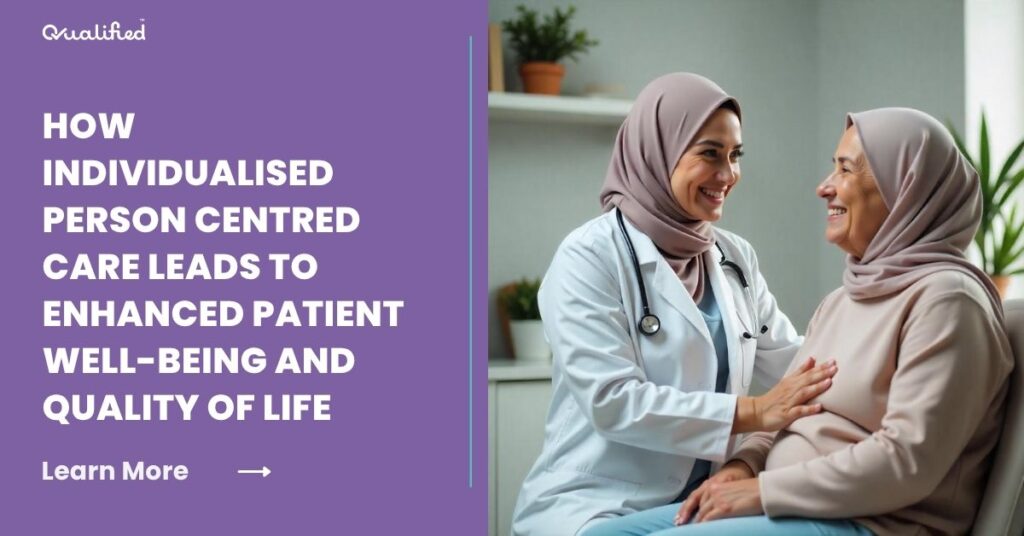
In today’s healthcare landscape, a one-size-fits-all approach no longer works. Individualised person-centred care is now tailored to each patient’s unique needs, values, and preferences. For healthcare systems, individualised person centred care leads to improved patient satisfaction, better treatment outcomes, and lower costs.
Discover why individualised person-centred care is important in healthcare, and what positive changes both patients and the healthcare system will benefit from implementing this approach.
What Is Individualised Person Centred Care?
Individualised person-centred care is a healthcare approach that prioritizes treating patients as unique individuals by addressing their specific circumstances, values, needs, and preferences. It empowers healthcare providers to deliver tailored care that goes beyond standard processes, ensuring respect, dignity, and active collaboration with patients in their care decisions. This approach emphasizes the person as a whole rather than solely focusing on their medical condition.
Why is Individualised Person Centred Care Important In Healthcare?
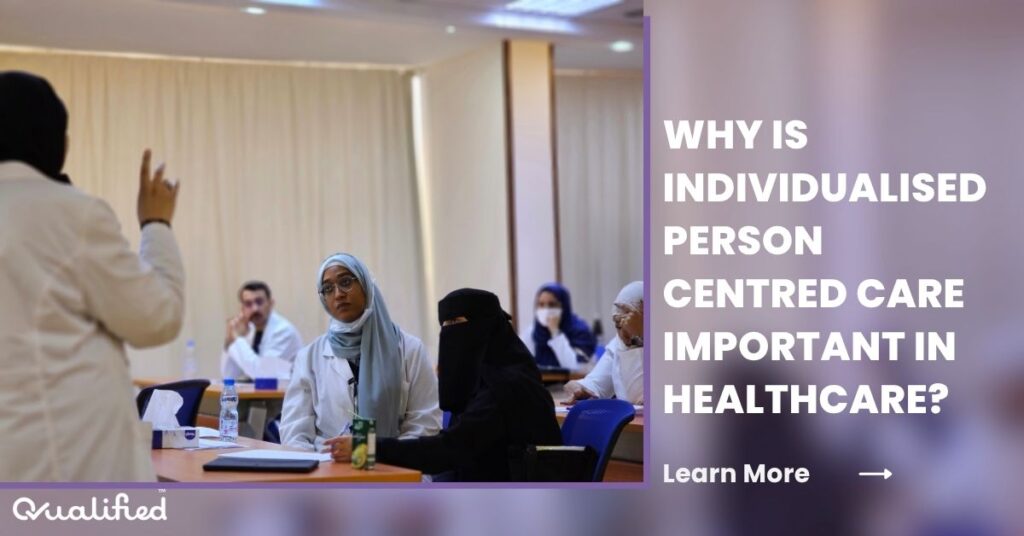
Individualised person centred care leads to a more effective and meaningful healthcare experience because it ensures patients and their families are actively involved in planning and managing care to meet their unique needs. It emphasizes seeing patients as partners and experts in their care, which leads to better outcomes and experiences.
Key reasons why this approach is important in healthcare include:
- Empowered Patients: It helps patients develop confidence, knowledge, and skills to manage their health.
- Improved Quality of Care: Tailored care ensures patients receive appropriate support, enhancing satisfaction and outcomes.
- Better Resource Utilization: Person-centred care promotes efficiency by avoiding unnecessary interventions and reducing the burden on healthcare systems.
- Holistic and Flexible Services: Care becomes more adaptable to individual lifestyles and preferences, reducing harm and neglect.
Positive Changes That Individualised Person Centred Care Leads To
The individualised person centred care leads to transformative improvements in the healthcare sector. This approach drives numerous positive changes and benefits to patients, healthcare providers, and the healthcare system.
For Patients
- Happiness: Receiving care that meets their needs reduces anxiety, boosts confidence, and enhances overall happiness and satisfaction.
- Flexibility: Care is tailored to each individual’s unique needs, avoiding a one-size-fits-all approach.
- Autonomy: When individuals take responsibility for their health, they are more motivated to adopt healthier lifestyle habits, such as balanced eating and regular exercise.
- Responsibility: Empowering individuals to make their own care decisions fosters greater engagement and involvement in their health.
- Independence: Improved quality of care enables individuals to rely less on healthcare services, supporting long-term independence.
For Healthcare Providers and Healthcare Systems
- Improved Provider Reputation. Builds trust and a positive image among healthcare consumers.
- Increases Morale and Productivity. Enhances clinicians’ and support staff’s job satisfaction and productivity.
- Improved Communication and Collaboration. Stronger relationships with patients lead to better communication and more effective teamwork.
- Efficient Resource Utilization. By addressing individual needs, unnecessary treatments are avoided, optimizing the use of healthcare resources.
- Cost Reduction and Financial Growth. It enhances financial margins and lowers costs throughout the healthcare spectrum.
Partner with us to bring individualised person-centred care to your facility. Contact us today to enhance patient satisfaction and outcomes.
Individualised Person Centred Care Leads to A Focus on the Healthcare Professionals’ Personality
Healthcare workers must exhibit particular personality traits that promote respect, trust, and teamwork to provide person-centred care. These characteristics guarantee that care is customized to meet each patient’s needs, which improves results and increases patient satisfaction. These traits include:
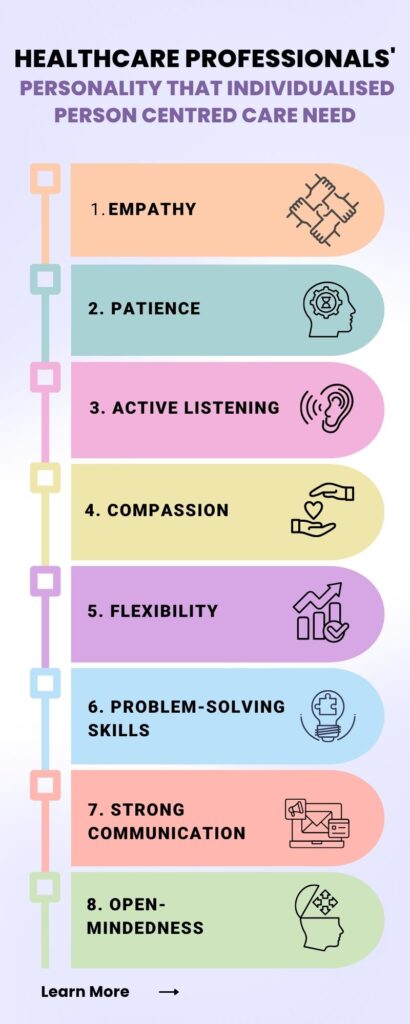
- Empathy
The ability to understand and share the feelings of patients, allowing healthcare professionals to establish an emotional bond with them. - Patience
Willingness to take the time needed to understand each patient’s unique needs and preferences without rushing. - Active Listening
Paying close attention to patients’ words and body language to make sure their wants and concerns are understood. - Compassion
A sincere desire to help and care for patients while creating a supportive and respectful environment. - Flexibility
The ability to modify care plans and methods in response to evolving situations or personal needs. - Problem-Solving Skills
The capacity to assess situations and develop creative, patient-centered solutions to address challenges. - Strong Communication
Clear and compassionate communication to ensure patients understand their care options and feel empowered in decision-making. - Open-Mindedness
Being receptive to patients’ perspectives, feedback, and suggestions to continuously improve care delivery.
These character attributes support the development of trust, solid patient relationships, and care that prioritizes the needs and preferences of the patient. As a healthcare professional, equip yourself with skills needed to deliver customized patient centred care through different medical fields! Join one of our top rated medical courses in KSA.
Conclusion
In summary, individualised person centred care leads to a better quality of life, patient well-being, and healthcare efficiency. By focusing on the individual, this approach ensures holistic, respectful, and empowering care for all. Supporting healthcare facilities with training and best practices provides a supportive environment, ultimately advancing patient outcomes and overall experiences.
Get the latest updates in healthcare sector by reading our interesting medical articles!