Patients have greater expectations than ever before for prompt and effective healthcare services. Decreasing wait times and increasing patient satisfaction are not only crucial for enhancing the overall patient experience but also for improving healthcare outcomes and fostering trust in healthcare providers.
This article explores the importance of patient satisfaction as a key indicator of patient experience and effective strategies to minimize wait times and increase patient satisfaction.
Patient Satisfaction: A Key Indicator In Patient Experience
In healthcare systems, patient satisfaction is a key indicator in assessing the total patient experience. It reflects how patients feel about the quality of treatment they receive, taking into account factors including wait times, medical staff attentiveness, and communication with healthcare providers.
High levels of patient satisfaction are associated with improved adherence to treatment plans, better health outcomes, and enhanced trust in healthcare providers. Conversely, dissatisfaction can lead to poor patient engagement and negative healthcare experiences.
The Relation Between Decreasing Wait Times and Increasing Patient Satisfaction
The length of time a patient must wait to make an appointment at your office or the time they spend in your waiting area are two of the most important factors affecting patient satisfaction. Long wait times seriously harm the satisfaction scale, healthcare results, and the financial stability of your practice.
Studies have shown that people express greater levels of confidence, involvement, and happiness with their healthcare professionals when they encounter little delays. Additionally, shorter wait times can promote greater communication during consultations, lessen patient anxiety, and increase adherence to treatment plans.
Strategies For Decreasing Wait Times And Increasing Patient Satisfaction
Cutting down on patient wait times benefits your healthcare practice’s overall performance and reputation. The best strategies for decreasing wait times and increasing patient satisfaction are:
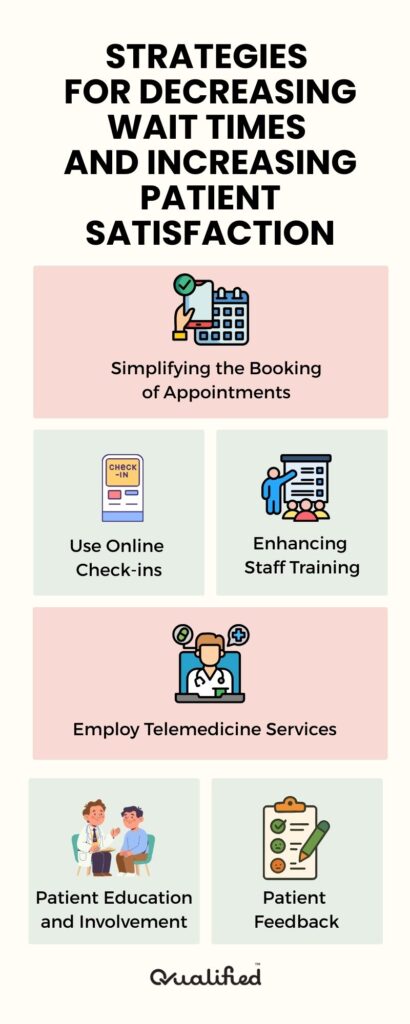
1- Simplifying the Booking of Appointments
The secret to controlling patient flow and cutting down on wait times is effective appointment scheduling. Obstacles can be removed and crowding during peak hours can be avoided by implementing staggered scheduling strategies and improved time management.
Staggered scheduling, for example, has been shown to reduce wait times by as much as 20%. Consider the impact it could have on your practice! A well-structured timetable improves overall efficiency, instead of long waits and frustrated patients.
2- Use Online Check-ins
Online check-ins significantly reduce wait times by streamlining the arrival process and eliminating reception bottlenecks. Patients can check in remotely, avoiding paperwork on-site and entering the care system more quickly.
Additionally, automated updates and reminders are frequently included with online check-ins, informing patients about upcoming appointments and any possible delays. This enhances patient satisfaction and lessens waiting-related anxiety.
3- Enhancing Staff Training
Comprehensive staff training is essential for efficiently managing patient needs and reducing wait times. Qualified and knowledgeable staff can make quick, informed decisions, ensuring faster patient processing. Cross-training employees and deploying them strategically during busy times can minimize delays.
Regular workshops on new technologies and procedures enhance operational efficiency, while strategic staff allocation improves patient flow, reducing wait times and increasing patient satisfaction.
4- Employ Telemedicine Services
Telemedicine services enable virtual consultations between patients and medical professionals. A patient may have a virtual consultation in a couple of hours, rather than waiting days or weeks for an in-person session.
Utilizing technology frees up real workplace space. As a result, medical professionals can visit more patients without being limited by the number of available rooms. Patients find it simpler to attend virtual sessions, hence lowering absence rates.
Telemedicine is convenient, cost-effective, and saves time on travel. It also benefits remote or underserved areas by improving access to healthcare.
5- Patient Education and Involvement
Appointment management can be greatly simplified by patient education and the use of patient portals. Encourage patients to use patient portals for communication and scheduling, as well as to fill out online forms before their visit. Wait times and appointment lengths can be shortened with this proactive strategy, resulting in a more productive visit and a more involved patient base.
6- Patient Feedback
You can find obstacles and inefficiencies in the healthcare process by learning about the experiences and suggestions of your patients.
Feedback identifies areas that need work, including staffing levels or schedules. Implementing these insights reduces wait times for patients and streamlines operations, resulting in a more effective system.
Improve patient care and maximize effectiveness by Collaborating with us to implement proven strategies, enhance your expertise, and elevate Your Career in healthcare.
Other Factors Affecting Patient Satisfaction
In addition to wait times, the most critical factors affecting patient satisfaction are:

1. Communication
Clear, empathetic, and respectful communication from healthcare providers is essential to building trust and enhancing the patient experience.
2. Scheduling Process
Outdated manual scheduling methods hinder efficiency and accessibility for patients. Without real-time updates, double-bookings or assigning unprepared providers become more likely, negatively impacting patient satisfaction and care quality.
3. Interaction With Healthcare Providers
Nowadays, patients anticipate timely contact from medical professionals. Outdated systems and slow replies reduce patient satisfaction and participation.In addition to joining medical courses, healthcare providers should enhance their communication skills.
4. Follow-Up Care
Without organized follow-up procedures, patients encounter delays in resolving issues, and switching between practitioners could exacerbate the situation.
5. Processes For Feedback
Without clear feedback channels, patients may feel unheard and turn to public forums to voice concerns.
Conclusion
In summary, decreasing wait times and increasing patient satisfaction are essential goals for delivering high-quality healthcare. Healthcare practitioners can use innovative approaches like improved scheduling, telemedicine, and staff training to enhance the patient experience while improving outcomes.
Learn more about improving your healthcare services through our interesting medical articles!